 Healthy Hands Cooking
Becoming a self-employed cooking teacher can be an incredibly rewarding career choice, especially if you have a passion for healthy eating and love working with children. Teaching kids how to prepare nutritious meals not only empowers them to make healthier choices but also instills valuable life skills they will carry into adulthood. If you're considering starting your own cooking instructor business, here are eight major benefits to this fulfilling profession and some creative ways to incorporate STEM learning into your lessons.
One of the most significant advantages of being a self-employed cooking teacher is the flexibility it offers. You can set your own schedule, choose how many classes you want to teach each week, and even adjust your work hours around your personal life. Whether you prefer weekend classes, after-school sessions, or summer camps, you have the autonomy to create a schedule that best fits your lifestyle.
Childhood obesity and poor nutrition are growing concerns, making it more important than ever to educate young people on the benefits of healthy eating. As a cooking teacher specializing in nutritious recipes, you have the power to shape children's food choices, teach them how to prepare wholesome meals, and encourage lifelong healthy habits.
Unlike a traditional teaching job with a fixed salary, being self-employed means you control your income potential. You can charge for individual classes, offer group sessions, host birthday parties, or even create online courses. As your reputation grows, you can expand your business by hiring assistants or offering specialized services like meal prep workshops for families.
Being a self-employed cooking teacher allows you to choose where you want to conduct your classes. You can teach from your home, rent a community kitchen, partner with schools, or offer mobile classes where you bring supplies to clients' homes. This flexibility helps you reach different audiences and create a unique teaching experience.
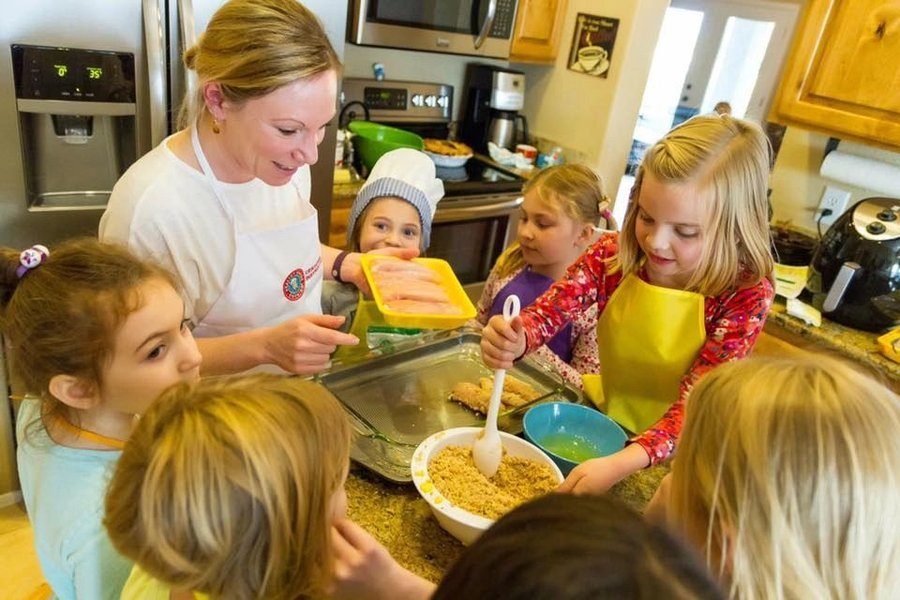
Teaching cooking to kids is an engaging and interactive experience. Unlike traditional classroom settings, your classes involve hands-on activities that help children develop practical skills. From measuring ingredients to plating their dishes, kids get to be actively involved in every step of the process, making learning both fun and memorable.
As a local cooking instructor, you become a valuable resource within your community. Parents appreciate having access to educational and entertaining activities for their children, and schools or recreational centers may invite you to partner with them for special events. Over time, you build strong relationships with families, local businesses, and community organizations that can help grow your business.
Few careers offer the same level of personal satisfaction as teaching children how to cook. Seeing kids excited about trying new foods, developing confidence in the kitchen, and sharing what they've learned with their families is incredibly rewarding. Additionally, running your own business provides professional growth opportunities, allowing you to learn marketing, business management, and customer service skills.
Cooking is not just an art — it's also a science. Teaching children about the scientific and mathematical aspects of cooking enhances their critical thinking skills and makes your classes even more valuable. Below are some ways to incorporate STEM (Science, Technology, Engineering, and Math) learning into your cooking lessons.
Cooking provides countless opportunities to introduce scientific concepts. You can demonstrate how ingredients interact, why certain foods change texture when heated, or how yeast causes bread to rise. Activities such as making homemade butter by shaking cream in a jar or watching baking soda react with vinegar can illustrate important scientific principles in a fun, engaging way.
Teaching kids how to use kitchen tools safely introduces them to basic technology concepts. You can explain how blenders, ovens, and food processors work, or discuss the role of digital scales and thermometers in achieving perfect results.
Engineering principles can be introduced through creative food challenges. Have students design and build structures using food items such as spaghetti and marshmallows, or construct fruit kebab towers to understand balance and stability.
Cooking naturally incorporates math skills, particularly when it comes to measurements, conversions, and proportions. Ask kids to double or halve a recipe to practice fractions, use measuring cups to understand volume, or weigh ingredients to learn about units of measurement.
While not strictly STEM-related, food presentation allows kids to use creativity and artistic skills. Encourage children to arrange food in visually appealing ways, experiment with colors, and design their own plating styles.
Becoming a self-employed cooking teacher offers incredible benefits, from flexible scheduling and financial growth to personal fulfillment and positive community impact. By incorporating STEM learning into your classes, you add another valuable layer to your curriculum, making your lessons more engaging and educational for kids.
If you're passionate about healthy eating and love working with children, launching a kids' cooking instructor business could be the perfect career path for you.
Get certified and get the tools you need with Healthy Hands Cooking's Certified Instructor Training.
Explore Instructor Training